How Long Does It Take to Look Normal After a Facelift? Recovery Timeline & Healing Stages
Choosing to have a facelift is a significant decision, and for many patients, the recovery process is just as important as the surgery itself. While most people understand that a facelift can improve sagging skin, jowls, and loss of facial definition, fewer know what to realistically expect once the procedure is over.
One of the most common questions patients ask during consultation is: ” How long does it take to look normal after a facelift?
The honest answer is that “normal” means different things at different stages of healing. You may feel well within a few days, look socially presentable within a few weeks, and continue seeing refinements for several months. Understanding these stages can help you prepare both physically and emotionally for recovery.
At Dr. Zamir Paez’s practice in Dubai, facelift procedures are carefully tailored to each patient’s anatomy and goals, with a strong focus on achieving natural-looking results and supporting a smooth recovery journey. Whether you are considering a traditional facelift, deep plane facelift, neck lift, or a combination procedure, knowing what happens after surgery can make the experience much less stressful.
Understanding What a Facelift Actually Changes
Before discussing recovery, it is important to understand what a facelift is designed to correct.
Facial aging affects much more than the skin. Over time, deeper tissues descend, fat compartments shift, collagen production declines, and skin elasticity decreases. These changes contribute to:
- Sagging cheeks
- Deep smile lines
- Jowls along the jawline
- Loose neck skin
- Loss of youthful facial contours
- Heaviness around the lower face
Modern facelift surgery addresses these deeper structures rather than simply tightening the skin. Repositioning the underlying tissues and removing excess skin allows surgeons to bring back a more youthful balance to the face, without compromising the natural appearance.
Important- Because skin’s deeper layers are involved, recovery occurs in stages and requires patience. |
Why Does Recovery Vary Between Patients?
No two facelift recoveries are identical. Some patients appear ready for social activities within two weeks, while others need additional time before they feel comfortable being seen publicly.
Several factors influence healing:
Patient factors
| Surgical Factors
| Recovery Factors
|
These variables all influence the overall facelift recovery timeline.
The Complete Facelift Recovery Timeline
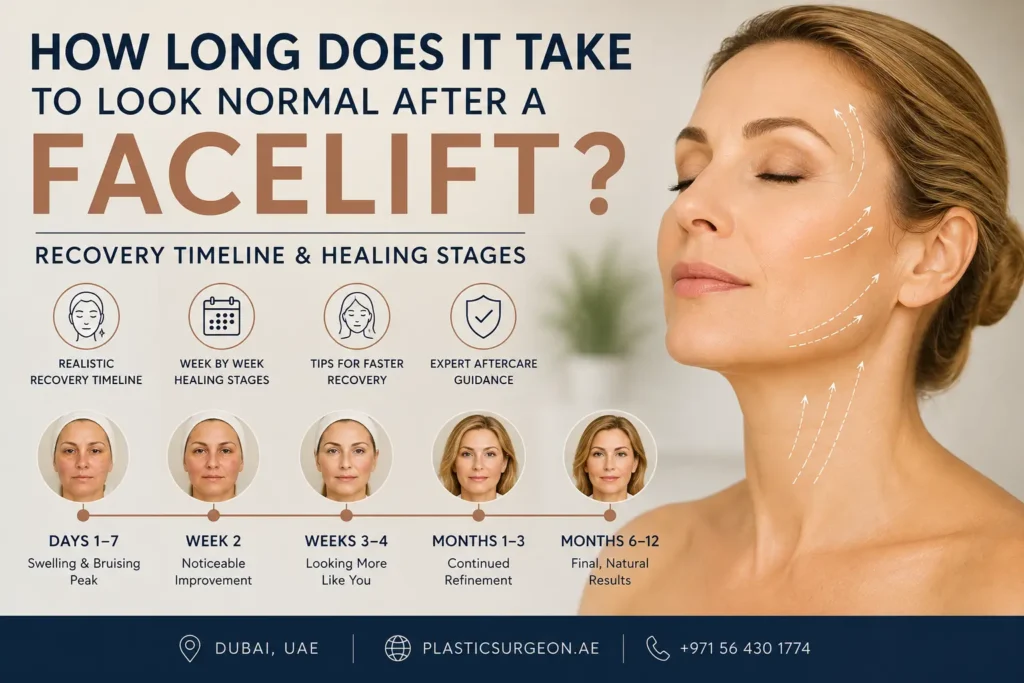
Days 1–3: The immediate healing phase
The first few days are often the most dramatic part of recovery.
Patients commonly experience:
Physical changes
|
Emotional changesMany patients experience temporary anxiety during this stage because swelling can make the face look fuller than expected. This is completely normal. At this point, your final result is hidden beneath postoperative swelling. |
Recovery prioritiesDuring these first days:
|
Days 4–7: Peak swelling stage
One of the biggest surprises for patients is that swelling often worsens before it improves. This stage represents the peak of the facelift swelling timeline.
What do you notice?
- Increased facial puffiness
- Bruising is becoming more visible
- Tightness around the neck
- Mild asymmetry caused by swelling
- Yellow, blue, or purple discoloration
Many patients worry that something has gone wrong. In reality, this stage is expected. The body’s inflammatory response is working to repair tissues and begin the healing process.
Common symptoms during this period
Symptom | Normal? |
Swelling | Yes |
Bruising | Yes |
Mild numbness | Yes |
Tight feeling | Yes |
Mild asymmetry | Yes |
Severe pain | No – should be reported |
Week Two: Significant Visible Improvement
For many patients, week two is a turning point. The face begins looking less “post-surgical” and more recognizable.
Improvements typically seen
- Reduction in facial swelling
- Less bruising
- Improved comfort
- Better jawline definition
- More natural facial contours
What happens to bruising?
The facelift bruising recovery process accelerates during this period.
Bruising often changes color:
- Purple
- Blue
- Green
- Yellow
- Fades completely
Many patients can comfortably conceal residual bruising with makeup once approved by their surgeon.
Social recovery
By the end of week two, many individuals:
- Attend family gatherings
- Work remotely
- Go out for errands
- Meet friends socially
However, close observers may still notice signs of recent surgery.
Weeks three and four: Looking normal again
This is the stage most patients are waiting for.
When people ask how long does it take to look normal after a facelift, the answer is often around this point.
What patients usually notice
- Significant reduction in swelling
- Improved facial mobility
- Better skin sensation
- More natural facial expressions
- Sharper jawline definition
What others notice
Instead of wondering whether you have had surgery, people tend to notice something else entirely and say:
- “You look rested.”
- “You look refreshed.”
- “Have you been on vacation?”
This is generally the goal of modern facelift surgery.
Returning to daily life
Most patients can:
- Return to office work
- Attend social events
- Dine out comfortably
- Participate in light exercise
This stage is often considered the most important milestone in the facelift recovery week by week journey.
Months One to Three: The Refinement Stage
Although patients often feel recovered by one month, healing continues beneath the skin.
Internal healing continues
During this stage:
- Deep tissues settle into position
- Swelling continues to decrease
- Scar tissue softens
- Skin sensation improves
Improvements become more noticeable
Patients frequently notice:
- Better cheek definition
- Smoother jawline contours
- More natural neck angles
- Less facial heaviness
This period is often when patients begin appreciating the true benefits of surgery.
Three to Six Months: Near-Final Results
At this stage, most swelling has resolved.
Facial features continue refining
The face begins to appear:
- Softer
- More natural
- Better balanced
- Less tight
Many patients report that friends and family no longer recognize they had surgery. Instead, they simply look younger and more refreshed.
Six to Twelve Months: Final Outcome
Complete healing can take up to a year. By this stage:
- Scars have matured significantly
- Residual swelling has resolved
- Facial tissues have settled
- Final contours are visible
This is when surgeons typically evaluate the true long-term outcome.
When Does Facelift Swelling Go Away?
One of the most frequently asked questions during recovery is when does facelift swelling go away. A general timeline looks like this:
Time After Surgery | Approximate Swelling Remaining |
1 Week | 100% peak swelling |
2 Weeks | 50–70% improved |
1 Month | 70–80% improved |
3 Months | 90–95% improved |
6 Months | Minimal residual swelling |
12 Months | Final result |
While most visible swelling improves within several weeks, subtle swelling may persist much longer without being noticeable to others.
Facelift Aftercare Tips That Support Better Healing
Proper facelift aftercare can significantly influence recovery quality.
Do
| Avoid
|
When Should You Contact Your Surgeon?
At Dr. Zamir Paez although complications are uncommon, patients should seek medical advice if they develop:
- Sudden severe swelling
- Persistent bleeding
- Fever
- Increasing redness
- Significant drainage
- Severe pain not relieved by medication
Prompt evaluation helps ensure safe recovery.
Planning Your Facelift Recovery with Dr. Zamir Paez
For most patients asking how long does it take to look normal after a facelift, the answer is usually around three to four weeks for social recovery, while final results continue to refine over several months. Understanding the facelift healing stages, facelift recovery Dubai, and proper facelift aftercare can help set realistic expectations and make the recovery process less stressful.
If you’re considering facelift surgery and would like personalized guidance on recovery and expected results, patients in Dubai looking for natural-looking, long-lasting facial rejuvenation can count on Dr. Zamir Paez for expert consultations and a treatment plan built entirely around their needs.
FAQs - Frequently Asked Questions
By three to four weeks, most patients feel ready to get back out there and look relatively normal to those around them, though the finer details of healing continue to develop quietly over the following months.
Swelling generally peaks between the second and fourth day after surgery before gradually improving.
Yes. Many patients are comfortable attending social activities after two weeks, although some swelling and bruising may still be present.
Most bruising improves significantly within two to three weeks and continues fading thereafter.
Many patients can begin wearing makeup around 10–14 days after surgery once incisions have sufficiently healed and their surgeon approves.
Most patients return to office-based work within two to three weeks, depending on their recovery progress.
Some extra initial swelling is possible with a deep plane facelift, but the overall recovery process tends to follow a similar path to other advanced facelift techniques.
Dr. Zamir Páez
About the Author
Dr. Zamir Páez
Board-Certified Plastic, Reconstructive & Aesthetic Surgeon
- Internationally Certified Plastic Surgeon
- Specialist in Advanced Body Contouring & Facial Aesthetics
- Practicing in Colombia & Dubai
- Founder of BodyCraft Academy
Dr. Zamir Páez is an internationally recognized plastic, reconstructive, and aesthetic surgeon known for delivering natural-looking results through advanced surgical techniques and personalized patient care. With over a decade of experience, he specializes in body contouring, mommy makeover procedures, breast surgery, rhinoplasty, facial rejuvenation, and HD liposculpture for patients across the Middle East and internationally.
Internationally trained at renowned institutions including The Royal Melbourne Hospital in Australia, Dr. Zamir combines surgical precision, innovation, and artistic balance to create refined aesthetic outcomes tailored to each patient. He is also the co-founder of BodyCraft Academy, where he contributes to the global education and training of plastic surgeons.
Medical Disclaimer
This article is intended for informational and educational purposes only and should not be considered medical advice, diagnosis, or treatment. Always consult a qualified healthcare professional regarding any medical or aesthetic concerns before undergoing any procedure.
Medically reviewed by Dr. Zamir Páez, Board-Certified Plastic, Reconstructive & Aesthetic Surgeon.
