How Much Weight Can You Lose After a Tummy Tuck? What to Expect
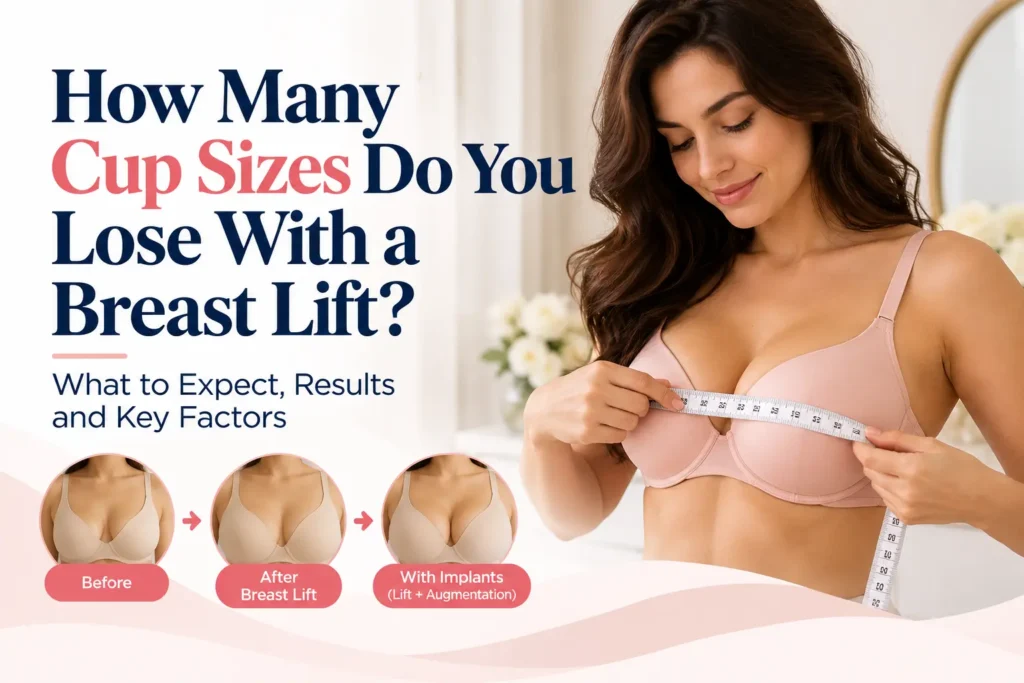
You may want a breast lift, but worry that you will end up in a smaller bra. That is a common concern, and it is a fair one to bring to your consultation.
So, how many cup sizes do you lose with a breast lift? Most women go down about one cup size. This usually happens because your bra fits better after surgery, not because your breasts have lost tissue. Your own breast lift cup size change may be smaller or larger than the average.
This blog explains why your bra size may change, and how a breast lift differs from a breast reduction. It also shows how Dr. Zamir Paez, a plastic surgeon practicing in Dubai and Colombia, plans a lift around your goals.
Key takeaways: Breast Lift cup size change
|
How Many Cup Sizes Do You Lose With a Breast Lift?
You may notice a change of around one cup size after a mastopexy (breast lift), but this is not a guaranteed or predictable result. A breast lift, also called mastopexy, primarily raises and reshapes sagging breasts rather than reducing their size.
A small study published in the Aesthetic Surgery Journal examined patients who underwent a breast lift without breast augmentation or implant removal. Among the 20 patients who completed the survey, the average reported decrease was approximately one cup size. Individual reports ranged from a decrease of three cup sizes to an increase of two.
This finding needs context. The study involved a small group, and bra cup sizes are not standardized across brands. It does not mean that everyone who has a breast lift will lose one cup size.
Your results may be different because:
- You may have more excess skin than breast tissue to remove.
- Your breasts may have lost volume after pregnancy, breastfeeding, or weight changes.
- Your surgeon may reshape and reposition the existing breast tissue without removing much of it.
- Your breasts may fit bras differently once the sagging skin and lower breast tissue are lifted.
Does Breast Lift Reduce Cup Size?
A breast lift changes the position and shape of your breasts. It does not shrink them the way a breast reduction does.
However, patients often perceive a subtle breast lift size reduction because of how the new shape looks in clothing. The lifted tissue sits higher on the chest wall, creating a perky, youthful contour.
While does mastopexy reduce breast size in terms of physical weight? No, skin itself weighs very little. But if your goal is to address sagging caused by pregnancy, nursing, or aging while preserving your natural fullness, a breast lift without reduction allows you to achieve elevation without losing natural tissue.
Breast Lift Before & After Cup Size: What To Expect
Your breasts will look different during each stage of healing. Here is a simple timeline:
- First days to weeks: Swelling and bruising are normal. Discomfort, swelling, and bruising usually last about two weeks. Early swelling can make your breasts look high and tight.
- First weeks: You will wear a supportive bra or dressing. Some surgeons advise a compression garment for up to six weeks.
- First months: Your breasts settle and start to look and feel more natural.
- Later: Scars fade slowly. Lift scars usually soften and fade within one to two years.
The early look is not the final look. Wait until your surgeon says your breasts have settled before you judge the result or buy new bras.
What Factors Affect Breast Lift Size Reduction?
Not every woman sees the same change after a lift. Several things can shape how much smaller your breasts look or fit.
- How much your breasts sag: Surgeons look at the degree of sagging (ptosis), nipple position, and skin quality when they plan a lift. In the cup size study, most women had moderate sagging.
- Your starting bra size: If your current bra is larger than your true size, you may see a bigger drop once your breasts are lifted.
- How much skin or tissue is removed: If your breasts have a lot of stretched skin, removing it may create a more compact shape. The amount of skin removed does not translate directly into a specific cup size change.
- Weight and hormone changes: Weight gain or loss and hormone status, since both can affect bra fit.
- Combined surgery: Adding an implant can raise your cup size. Adding a reduction can lower it. Your surgeon will plan this with you.
- Where you are in healing: Early swelling can hide your final size. Your breasts settle over several months.
Because these factors vary, ask your surgeon what to expect for your body instead of relying on the average alone.
Breast Lift Bra Size Change: Cup, Band, and Fit
Understanding your potential breast lift bra size change requires looking at both cup size and band size:
- Cup size: Most patients stay the same or drop 1 cup size (e.g., moving from a 34D to a 34C) because the breast profile becomes firmer and more compact.
- Band size: Your ribcage circumference does not change during surgery, so your band size (e.g., 34, 36, 38) typically stays exactly the same.
- Overall fit: Bras will fit more comfortably without wire digging, side spill, or gaping at the top of the cup.
It is recommended to wait until the post-operative swelling has completely resolved, usually around 8 to 12 weeks, before being professionally measured for new bras.
Breast Lift vs Breast Reduction: What is the Difference?
These two surgeries solve different problems:
Feature | Breast lift | Breast reduction |
Main goal | Lifts sagging breasts | Reduces breast size and weight |
What is removed | Excess skin | Fat, breast tissue, and skin |
Change in size | No major change in volume | Breasts become smaller |
Pain relief | Does not relieve weight-related pain | May ease back, neck, and shoulder pain |
Often suited to | Drooping breasts of a comfortable size | Heavy, large breasts |
A reduction also moves the nipple higher, so it includes a lift. A lift can also be combined with a reduction if you want smaller breasts and a higher position. Your surgeon will tell you which fits your goals.
Breast Lift Without Reduction: Keeping or Adding Fullness
If you want to maintain your current breast size or desire added cleavage, you can tailor your surgical approach:
- Breast lift with an implant: A breast lift is often combined with breast augmentation when breasts have lost a lot of volume.
- Breast lift with fat transfer: Some surgeons use your own fat to add volume.
- Breast lift alone: Suited to women who are comfortable with their volume and mainly want a higher position.
Adding an implant brings extra risks, which your surgeon will explain. No plan can promise a specific cup size, so ask your surgeon what is realistic for you.
What Can Change Your Breast Lift Results and Size Later?
A breast lift does not stop time. A lift generally does not last a lifetime, and that pregnancy, weight changes, and aging can affect how your breasts look.
- Pregnancy and breastfeeding: These can change breast size and skin. Dr. Zamir Paez notes that surgery may not be right if you plan to have children or breastfeed in the future.
- Weight gain or loss: Large changes can alter your breast volume and shape. He advises keeping a stable weight.
- Aging and gravity: Over time, natural changes in skin elasticity and tissue density will exert gradual effects on breast position.
- Supportive bras: Dr. Zamir Paez recommends them to help protect your results.
- Hormonal shifts: Menopause and hormonal therapies can influence tissue density and overall breast fullness.
Risks You Should Know Before a Breast Lift
Like any surgical procedure, a breast lift involves inherent operational risks and recovery considerations that should be thoroughly evaluated with your surgeon:
- Reactions to anesthesia
- Bleeding or a blood collection (hematoma)
- Infection
- Uneven breast shape or position (asymmetry)
- Scarring, which is permanent but fades
- Changes in nipple or breast sensation
- Rare loss of part or all of the nipple or areola
- Trouble breastfeeding for some women
- Poor wound healing, which is more likely in smokers
Your surgeon should explain these risks and how they are managed before you sign a consent form. A breast lift is not right for everyone, and you should never feel pressured to have one.
How Does Dr Zamir Paez Plan your Breast Lift?
Dr. Zamir Paez is a plastic surgeon licensed by the Dubai Health Authority (DHA). He earned his medical degree and specialized in plastic surgery at Pontificia Universidad Javeriana in Bogotá, Colombia.
With more than 10 years of experience, he is a member of the American Society of Plastic Surgeons (ASPS), the International Society of Aesthetic Plastic Surgery (ISAPS), and the Colombian Society of Plastic Surgery.
At your consultation, you can expect Dr. Zamir Paez to:
- Ask about your goals, including the size you want to keep or change
- Review your medical history, pregnancies, and plans for children
- Examine your breast shape, skin quality, and nipple position
- Explain whether a lift alone, a lift with an implant, or a reduction fits you best
- Describe scar patterns (anchor, lollipop, or periareolar) and what to expect
- Walk you through risks and recovery
If you are concerned about how many cup sizes you may lose with a breast lift, discuss this during your consultation. A lift primarily changes breast shape and position, but your bra size may change depending on your anatomy and the surgical technique. Dr. Zamir Paez can explain the expected changes and limitations based on your individual assessment.
FAQs - Frequently Asked Questions
You may find that you fit better in a bra cup that is half a size or one full size smaller. While your physical tissue volume remains similar, your breast tissue becomes tighter and more compact, reducing empty space in bra cups.
Breasts may look smaller because the surgeon removes excess skin and reshapes the breast tissue into a higher, more compact contour. This change in shape can make the breasts appear less bulky without a major loss of breast volume.
Yes, you can choose a breast lift without reduction. If you are happy with your natural size, your surgeon will focus entirely on removing stretched skin and restoring a youthful position without removing deep breast tissue.
A breast lift can improve firmness and contour by reshaping your existing breast tissue. However, it does not add volume, and it may not restore upper breast fullness. If you want more volume, your surgeon can discuss implants or other suitable options.
Skin weighs very little, so removing it does not change volume much. What changes is the shape and how your bra fits. If you are wondering how many cup sizes you lose with a breast lift, this is the main reason.
Yes, breast size can shift over time due to weight fluctuations, hormonal changes, aging, or pregnancy. Maintaining a stable weight helps preserve your post-surgical shape and bra fit.
Yes. Significant weight loss can reduce breast volume because breasts contain fatty tissue. This may affect fullness, shape, and skin laxity after a breast lift. If you plan to lose a substantial amount of weight, discuss timing with your surgeon.
Pregnancy can change breast size and skin elasticity, even after a lift. Breast enlargement during pregnancy and changes after breastfeeding may affect your surgical results. If you plan to become pregnant, discuss the timing of surgery with your plastic surgeon.
Yes, a breast lift and breast reduction are routinely combined. If you wish to reduce physical weight and size while elevating sagging tissue, your surgeon can remove underlying glandular tissue during the lift procedure.
Your surgeon reviews your current bra size, then examines how much your breasts sag, where your nipples sit, and how your skin feels. You will also talk about the size you want. The surgeon may lift your breast by hand to preview the result.
Dr. Zamir Paez
About the Author
Dr. Zamir Paez
Board-Certified Plastic, Reconstructive & Aesthetic Surgeon
- Internationally Certified Plastic Surgeon
- Specialist in Advanced Body Contouring & Facial Aesthetics
- Practicing in Colombia & Dubai
- Founder of BodyCraft Academy
Dr. Zamir Paez is an internationally recognized plastic, reconstructive, and aesthetic surgeon known for delivering natural-looking results through advanced surgical techniques and personalized patient care. With over a decade of experience, he specializes in body contouring, mommy makeover procedures, breast surgery, rhinoplasty, facial rejuvenation, and HD liposculpture for patients across the Middle East and internationally.
Internationally trained at renowned institutions including The Royal Melbourne Hospital in Australia, Dr. Zamir combines surgical precision, innovation, and artistic balance to create refined aesthetic outcomes tailored to each patient. He is also the co-founder of BodyCraft Academy, where he contributes to the global education and training of plastic surgeons.
Medical Disclaimer
This article is intended for informational and educational purposes only and should not be considered medical advice, diagnosis, or treatment. Always consult a qualified healthcare professional regarding any medical or aesthetic concerns before undergoing any procedure.
Medically reviewed by Dr. Zamir Paez, Board-Certified Plastic, Reconstructive & Aesthetic Surgeon.
