How Much Weight Can You Lose After a Tummy Tuck? What to Expect
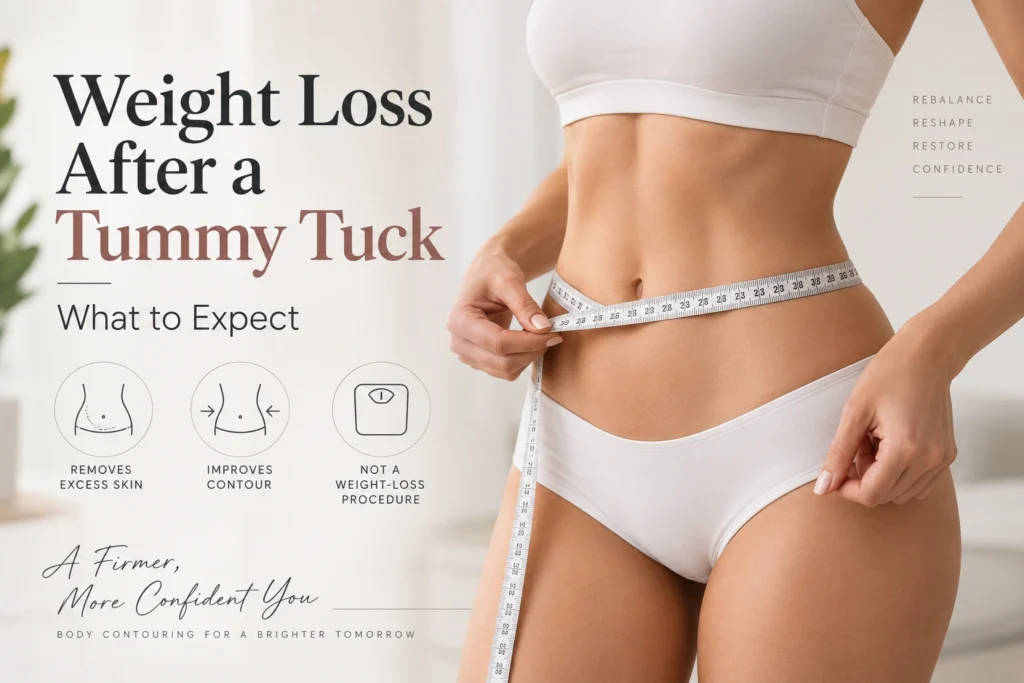
If you step on the scale after a tummy tuck, will the number be dramatically lower? Probably not, and that is an important point to understand before considering surgery.
A tummy tuck removes loose abdominal skin and, in some cases, a degree of excess fat. This means some weight loss after tummy tuck surgery is possible. However, the main purpose of the procedure is to reshape the abdomen rather than produce substantial weight loss.
Dr. Zamir Paez is a specialist plastic surgeon with more than 10 years of experience, and his work includes advanced body-contouring procedures, with treatment planned around each patient’s anatomy and desired proportions.
In this guide, we explain how much weight can you lose with a tummy tuck, what actually causes the change on the scale, and what happens if your weight changes later.
How Much Weight Can You Lose With a Tummy Tuck?
There is no standard number of pounds that every patient loses after abdominoplasty.
The amount depends largely on how much excess skin and fatty tissue needs to be removed and the extent of surgery. For many patients, the actual weight removed is relatively modest. Someone with substantial loose skin following major weight loss may have more tissue removed than a patient seeking treatment for abdominal changes after pregnancy.
This is why tummy tuck weight loss should never be the main measure of a successful result. A person may lose only a few pounds but notice a considerable difference in abdominal shape, waist definition, and the way clothing fits.
What Does a Tummy Tuck Actually Remove?
Abdominoplasty is designed to address changes that diet and exercise cannot always correct, particularly loose skin and stretched abdominal tissues.
Depending on the surgical plan, your plastic surgeon may include:
- Removing loose or hanging abdominal skin
- Removing some fat attached to the excised skin
- Tightening weakened or separated abdominal muscles when indicated
- Repositioning the remaining skin to produce a firmer abdominal contour
- Combining the procedure with liposuction when additional fat contouring is appropriate
Therefore, weight loss from tummy tuck comes mainly from the tissue physically removed during surgery. It is different from losing body fat through a calorie deficit or a medical weight-management program.
Weight Loss After Tummy Tuck: What Can Affect The Number?
Two people undergoing abdominoplasty can have very different changes on the scale.
Factor | How it may affect the weight removed |
Amount of loose skin | More excess tissue may mean greater tissue weight is removed |
Type of tummy tuck | A mini, full, or extended procedure removes different amounts of tissue |
Previous major weight loss | Patients may have larger folds of redundant skin |
Liposuction | Additional localized fat may be removed when liposuction is combined with surgery |
Individual anatomy | Skin distribution, fat deposits, and abdominal proportions vary between patients
|
Your surgeon can provide a more useful estimate after examining your abdomen.
Does a Tummy Tuck Help You Lose Weight?
A tummy tuck can reduce your body weight slightly because tissue is removed, but it is not a weight-loss operation.
Abdominoplasty is generally most appropriate when you are reasonably close to your intended weight, and that weight has become stable. Significant weight loss planned after surgery may create further loose skin and change the contour achieved by the operation.
Likewise, a tummy tuck does not replace balanced nutrition, regular physical activity, or medical treatment for obesity when required.
Tummy Tuck After Weight Loss: Why Timing Matters?
A tummy tuck after weight loss is particularly helpful when the scale has changed, but the abdomen has not responded in the same way.
After substantial weight loss, skin may not fully contract around the smaller body frame. Folds of excess abdominal skin can remain even after the person reaches a stable weight. Abdominoplasty can remove this redundant tissue and reshape the abdominal area.
Ideally, patients should discuss surgery once their weight has stabilized. If you are still actively losing a significant amount of weight, your surgeon may recommend waiting so that treatment can be planned around your more stable body shape.
Can You Continue Losing Weight After a Tummy Tuck?
Yes. After a tummy tuck weight loss can still happen.
However, losing a large amount of weight after surgery may alter the result. As the volume beneath the skin decreases, additional looseness can develop.
For this reason, patients who still have substantial weight-loss goals are often advised to work toward them before undergoing abdominoplasty.
What Happens If You Gain Weight After Surgery?
Fat cells remain elsewhere in the abdomen and throughout the body after a tummy tuck. Those cells can enlarge if you gain weight.
Small fluctuations may not significantly alter your result, but substantial weight gain can increase abdominal fullness and stretch the skin. Pregnancy can also stretch the abdominal wall and skin again.
Maintaining a relatively stable weight after recovery is therefore important for preserving the contour achieved through surgery.
Is a Tummy Tuck Suitable If You Are Overweight?
Being above a particular weight does not automatically determine whether you can or cannot undergo abdominoplasty. Suitability depends on your overall health, medical history, weight stability, anatomy, surgical goals, and individual risk profile.
If considerable further weight loss is recommended or planned, it may be better to achieve and maintain that change before surgery.
A detailed surgical assessment is the appropriate way to decide when and whether a tummy tuck should be performed.
Why Choose Dr. Zamir Paez for Tummy Tuck Surgery in Dubai?
Dr. Zamir Paez brings an international background in plastic, aesthetic, and reconstructive surgery to his body-contouring practice in Dubai.
His approach includes:
- 10+ years of surgical experience: With experience spanning America and the UAE.
- 5,000+ surgeries: Extensive experience in plastic, reconstructive, and aesthetic procedures.
- Advanced body contouring: His practice includes abdominoplasty, lipoabdominoplasty, liposculpture, and 360-degree body-contouring procedures.
- Modern technologies: His body-contouring practice incorporates technologies such as VASER and Renuvion, where clinically appropriate.
- Individualized surgical planning: The procedure is selected according to the patient’s anatomy, tissue distribution, and goals rather than a fixed surgical formula.
- DHA-licensed Specialist Plastic Surgeon: Zamir practices in Dubai with specialist licensing from the Dubai Health Authority.
The Scale is only One Part of Your Tummy Tuck Result
So, how much weight do you lose after a tummy tuck? Usually, the more useful question is how much your abdominal contour may change.
A tummy tuck is designed to remove redundant skin, address selected excess tissue, and create a firmer abdominal profile. The number on the scale may fall, but substantial weight loss is not the purpose of abdominoplasty.
For patients considering surgery in Dubai, Dr. Zamir Paez provides individualized assessment and body-contouring plans based on anatomy, health, and realistic surgical goals.
Schedule a consultation to discuss whether tummy tuck surgery is appropriate for your body-contouring goals.
FAQs - Frequently Asked Questions
There is no fixed amount. How much weight is lost with abdominoplasty depends on the volume of skin and associated tissue removed, the type of tummy tuck, and whether liposuction forms part of the surgical plan.
There may be a slight decrease in your weight because excess tissue is removed. However, a tummy tuck is a body-contouring surgery rather than a treatment for losing a significant amount of body weight.
Remaining fat cells can again enlarge if you gain weight in future. Maintaining stable lifestyle habits can help preserve your abdominal contour.
Yes. However, substantial additional weight loss may lead to new skin laxity and alter the surgical result. If you have major weight-loss goals, discuss them with your surgeon before scheduling surgery.
Significant weight gain can increase abdominal fullness and stretch the skin and underlying tissues. This may reduce some of the contour improvement achieved through surgery.
Possibly, but suitability must be assessed individually. Your health, weight stability, medical conditions, anatomy, and plans for future weight loss all need to be considered before surgery.
A tummy tuck mainly removes excess skin along with some portion of attached fatty tissue. The appropriate amount of fat removal depends on individual anatomy and surgical safety.
Dr. Zamir Páez
About the Author
Dr. Zamir Páez
Board-Certified Plastic, Reconstructive & Aesthetic Surgeon
- Internationally Certified Plastic Surgeon
- Specialist in Advanced Body Contouring & Facial Aesthetics
- Practicing in Colombia & Dubai
- Founder of BodyCraft Academy
Dr. Zamir Páez is an internationally recognized plastic, reconstructive, and aesthetic surgeon known for delivering natural-looking results through advanced surgical techniques and personalized patient care. With over a decade of experience, he specializes in body contouring, mommy makeover procedures, breast surgery, rhinoplasty, facial rejuvenation, and HD liposculpture for patients across the Middle East and internationally.
Internationally trained at renowned institutions including The Royal Melbourne Hospital in Australia, Dr. Zamir combines surgical precision, innovation, and artistic balance to create refined aesthetic outcomes tailored to each patient. He is also the co-founder of BodyCraft Academy, where he contributes to the global education and training of plastic surgeons.
Medical Disclaimer
This article is intended for informational and educational purposes only and should not be considered medical advice, diagnosis, or treatment. Always consult a qualified healthcare professional regarding any medical or aesthetic concerns before undergoing any procedure.
Medically reviewed by Dr. Zamir Páez, Board-Certified Plastic, Reconstructive & Aesthetic Surgeon.
