Revisional vs Primary Rhinoplasty in Dubai — What to expect & how surgeons plan each?
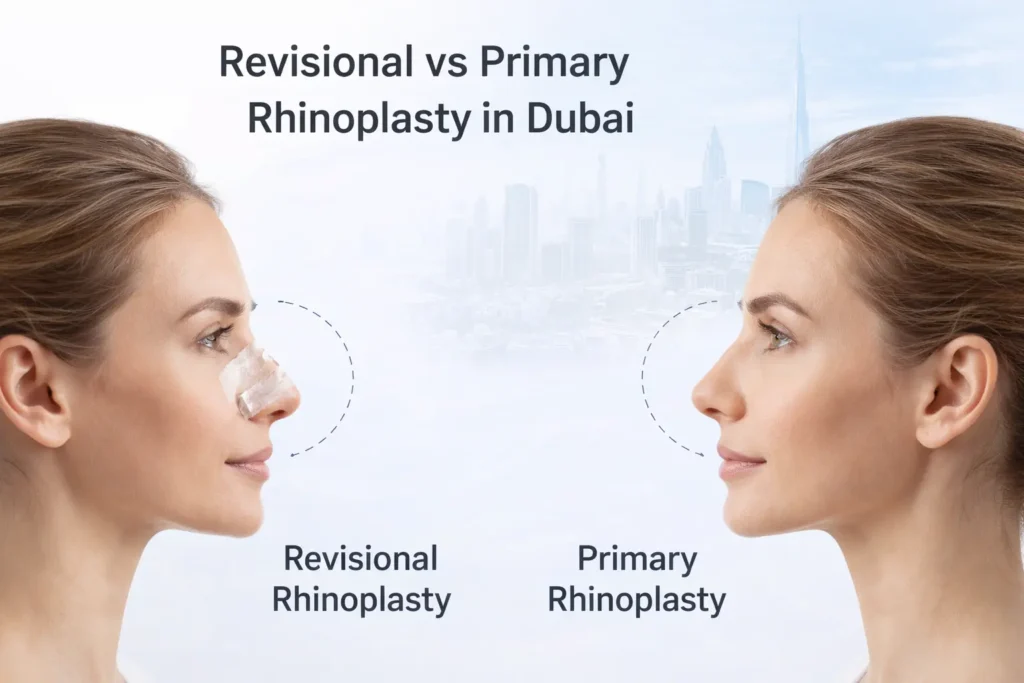
Choosing to undergo nose surgery is a significant decision that impacts both facial harmony and breathing function. In a global hub of aesthetic excellence like the UAE, patients often face the choice between an initial procedure and a corrective one.
Many patients searching for a rhinoplasty surgeon in Dubai want to understand the difference between primary procedures and revision surgery before deciding on treatment.
For those seeking expert care under Dr. Zamir Paez, understanding the nuances of revision rhinoplasty in Dubai is essential for setting realistic expectations and achieving a successful outcome. Whether it is your first time or a failed rhinoplasty correction, a tailored surgical approach is the key to lasting satisfaction.
Defining the Scope: Primary vs Revision Rhinoplasty
The term ‘primary’ denotes the first instance of surgical intervention aimed at altering the bone, cartilage, or skin of the nose. In these cases, the surgeon works with “virgin” tissue, meaning the skin, cartilage, and bone structures are in their natural state, making them more predictable to sculpt.
In contrast, revision rhinoplasty, also known as secondary nose surgery in Dubai, is performed to correct or improve the results of a previous procedure. This might be necessary due to aesthetic dissatisfaction, such as a pinched tip or a dorsal hump that wasn’t fully removed, or functional issues, such as a collapsed airway. Because the internal structures have already been altered, the surgeon must navigate around previous changes to restore balance.
Patients considering rhinoplasty surgery in Dubai should understand how primary procedures differ from revision surgeries in terms of surgical planning and complexity.
Understanding the complexities of Revision Rhinoplasty
Correcting a previous nasal surgery is a complex undertaking, requiring a higher level of surgical precision and artistic judgment than a primary procedure. There are several factors that contribute to this complexity:
- Scar tissue: Previous surgeries leave behind internal scarring (fibrosis), which makes the skin less elastic and harder to separate from the underlying framework.
- Structural depletion: Often, in a failed rhinoplasty, too much cartilage was removed. This leaves the nose without the necessary support, requiring cartilage grafting in revision rhinoplasty to rebuild the bridge or tip.
- Altered anatomy: The original landmarks of the nose may be shifted or missing, requiring a reconstructive mindset rather than just a cosmetic one.
Dr. Zamir Paez specializes in complex rhinoplasty cases, utilizing advanced techniques such as ultrasonic rhinoplasty to minimize further trauma while achieving high-precision results.
Because revision rhinoplasty procedures require advanced surgical skill, patients often seek specialists with extensive experience in complex nasal reconstruction.
Identifying the ideal candidate for corrective nose surgery
A suitable candidate for corrective surgery is someone who is physically healthy but unhappy with the outcome of their first procedure. Common reasons for seeking a corrective rhinoplasty surgeon Dubai include:
- Persistent breathing difficulties or nasal valve collapse.
- Asymmetry or unnatural contours (e.g., an “operated” look).
- Excessive scar tissue formation has distorted the nose’s shape.
- Incomplete correction of the original concerns.
It is generally recommended to wait at least 12 months after the initial surgery before seeking a revision. This ensures that all residual swelling has subsided and the tissues have softened enough for a safe second intervention.
Surgical Planning Differences in complex Nose Surgery
Planning for primary vs revision rhinoplasty requires different strategies. For a primary case, the focus is on a clear aesthetic blueprint using the patient’s existing cartilage. However, for revision cases, Dr. Zamir Paez conducts a more exhaustive evaluation:
- Internal assessment: Checking for structural integrity and the amount of healthy septal cartilage remaining.
- Graft sourcing: If the septum is depleted, the surgeon must plan for alternative graft sites, such as the ear or rib, to provide structural reinforcement.
- 3D simulation: Using advanced imaging to help patients visualize the corrective possibilities while staying within the limits of what scar tissue will allow.
Recovery Timeline: Primary vs Secondary Rhinoplasty
There are notable differences in rhinoplasty recovery between the two procedures. While the initial stages, such as wearing a splint for one week, are similar, the internal healing for a revision can be slower.
In a primary procedure, major swelling usually dissipates within a few weeks. In secondary cases, because lymphatic drainage has been previously disrupted by scar tissue, the nose may retain minor swelling for a longer period. While you can return to social activities within 10 to 14 days, the final “refined” look of a revision may take up to 18 months to fully stabilize.
Risks and challenges in Revision Cases
Every surgery carries risks, but revision cases involve specific challenges. These include a higher risk of skin contour irregularities, prolonged swelling, and difficulties achieving perfect symmetry due to underlying scar tissue.
There is also the challenge of “predictability”—scar tissue contracts differently than natural tissue during the healing phase. Choosing a board-certified expert who understands these variables is the best way to mitigate these concerns.
If you are considering nasal surgery, scheduling an expert rhinoplasty consultation in Dubai can help you understand the best surgical options for your facial structure.
Ready to Achieve the Profile you deserve?
Reclaiming your confidence, especially after a previous procedure, requires a surgeon who understands the delicate balance of structural restoration and aesthetic harmony. Dr. Zamir Paez is dedicated to providing bespoke, high-end results that prioritize your safety and long-term satisfaction.
Whether you are seeking a primary transformation or need an expert eye for a failed rhinoplasty correction, join the many international and local patients who trust Dr. Zamir Paez for world-class surgical care in the heart of Dubai. Book your private consultation today
FAQs - Frequently Asked Questions
Primary Rhinoplasty is the initial surgery on a previously untouched nose, while revision rhinoplasty corrects issues remaining from a previous operation.
It involves working with existing scar tissue and a potentially compromised blood supply and often requires rebuilding the nasal structure with grafts.
Suitable candidates are those with functional or aesthetic issues from a prior surgery who have waited at least one year for the tissues to fully heal.
Planning for revision often involves identifying external cartilage sources (rib or ear) and managing scar tissue, whereas primary planning uses the nose’s natural anatomy.
Primary recovery is typically faster, whereas secondary cases may experience more prolonged swelling due to disrupted lymphatic pathways.
Risks include limited skin elasticity, contour irregularities, and the unpredictability of scar tissue healing over time.
When looking for a specialist, you should prioritize experience in reconstructive work. A great surgeon for a primary nose job may not necessarily be the right choice for a complex revision. Look for:
- Board certification and international credentials
- A portfolio specifically showing “before and after” results for revision cases.
- Transparency regarding the need for grafts and the limitations of scar tissue.
A surgeon who prioritizes breathing function as much as aesthetics.
