When Can You Drive After Breast Augmentation? Recovery Timeline & Safety Tips
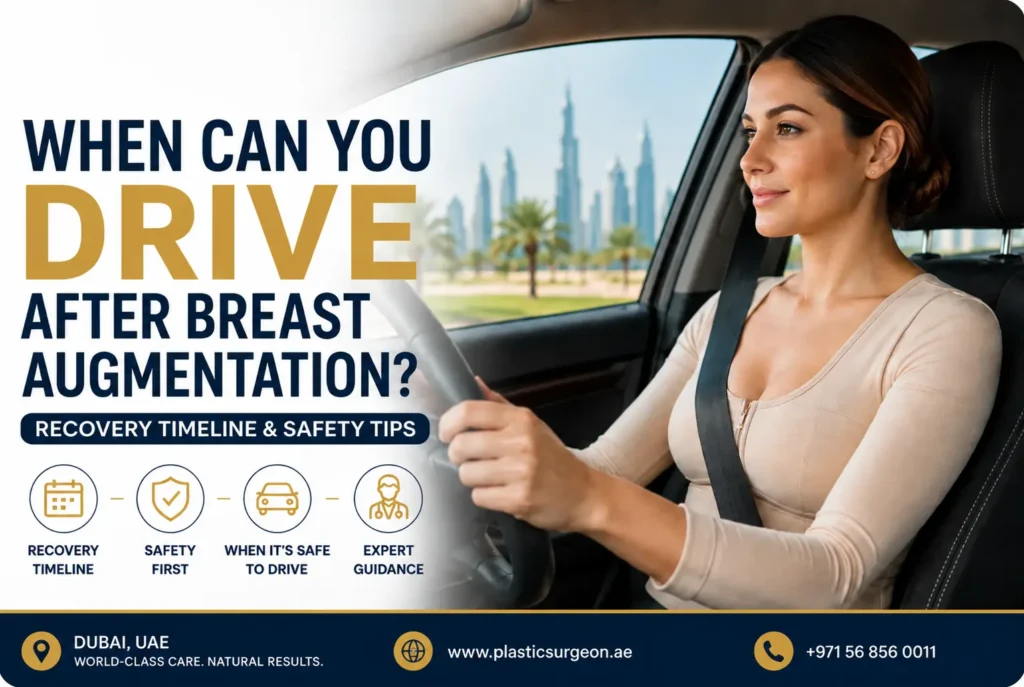
After breast surgery in Dubai, you may find yourself with a body contour that you’re happy with. After breast augmentation, some lifestyle changes are necessary, especially driving; patients may want to get back to their regular routines, but it is important to make the necessary changes. A common question during the initial consultation is, when can you drive after breast augmentation?
Patients considering breast augmentation in Dubai should understand that a smooth recovery is just as important as the surgical procedure itself for achieving the best long-term results.
It is essential to be aware of the limitations of the healing process in order to achieve a successful long-term surgical result. Too early to get back to your routine may undermine your outcomes. This comprehensive guide outlines the essential breast augmentation recovery timeline, milestones, and safety protocols required before you return to the driver’s seat.
Why Does Driving After Breast Augmentation Requires Caution?
Driving a car requires more effort from the chest wall than one might think. The pectoralis major muscles are used in steering, shifting gears, turning to check blind spots and reacting to sudden traffic situations. The muscles and soft tissues around these muscles are inflamed and susceptible to injury after surgery.
If you attempt to drive too soon, the strain of turning the wheel or the impact of bracing for a sudden stop can compromise your incisions. This activity can lead to complications like bleeding, fluid buildup, or implant movement. Furthermore, your natural reaction times may be slower due to post-operative fatigue, making early driving a safety hazard.
What Factors Affect Recovery After Breast Augmentation?
Every patient experiences a unique recovery after breast augmentation surgery. Several specific factors influence the speed at which you regain your mobility:
- Implant placement: Placing implants beneath the chest muscle (submuscular) causes more initial disruption to the tissues than placing them above the muscle (subglandular). Patients with submuscular placement typically require more time before they can comfortably move their arms.
- Implant size: Larger, heavier implants will put more initial pressure on tissue and incisions.
- Individual healing capacity: A person’s overall health, age and implementation of aftercare treatments directly influence the body’s ability to heal.
Recovery recommendations are often similar after breast lift surgery in Dubai, particularly when it comes to limiting upper-body movement and returning to daily activities safely.
When Can Most Patients Drive Again?
For the majority of individuals undergoing driving after breast implants, a safe timeframe to return to the road is between 7 and 14 days post-surgery. However, this timeline depends entirely on individual physical progress rather than a strict number of days.
Before you start driving after breast surgery, you must meet two main criteria: You must no longer require prescription pain medication, and you must have regained a full, pain-free range of motion in your upper body. You must be able to turn the steering wheel completely and look over your shoulder without discomfort.
Risks of Driving Too Early After Surgery
Returning to the road prematurely introduces several avoidable risks to your breast implant recovery tips. The physical strain placed on the chest can lead to the following complications:
- Incision separation: The pulling motion of steering can place tension on fresh wounds, leading to delayed healing or wider scars.
- Hematoma or seroma formation: Sudden upper body movements can cause internal bleeding or fluid pockets to develop around the implant.
- Implant displacement: Forceful muscle contractions can push an implant out of its designated pocket, altering the final cosmetic symmetry.
Can You Be a Passenger Before You Can Drive?
Yes, you can ride as a passenger immediately after your procedure, including on your journey home from the surgical center. However, you should take specific steps to protect your chest.
Wear your prescription surgical support bra to limit movement. Sit slightly back to avoid pressure on the torso. Also, it’s helpful if there is a small soft pillow between the chest and the seatbelt to avoid direct pressure on the incisions.
How Pain Medication Affects Driving Ability?
Prescription pain relievers and muscle relaxants alter your central nervous system, slowing down response times and causing drowsiness. Operating a vehicle while taking these medications is dangerous and illegal.
It is important to wait at least 24 to 48 hours after the last dose of narcotic medication before driving. If you still require prescription medication to manage your discomfort, you are not yet ready to drive.
Recovery Timeline After Breast Augmentation Surgery
A structured overview helps patients manage expectations during the healing process:
- Days 1 to 3: Focus entirely on rest. It is recommended that a little walking around the home is done for circulation purposes, but no upper-body movement. Travelling in a vehicle is not allowed.
- Days 4 to 7: Acute discomfort begins to diminish, and most patients transition from prescription medication to over-the-counter pain relievers.
- Weeks 2 to 3: Mobility improves significantly. With professional clearance, short driving trips may be resumed if movement feels natural.
- Weeks 4 to 6: The tissues continue to soften, allowing a gradual return to light exercise, though heavy chest workouts should still be avoided.
Signs You May Be Ready To Drive Again
Before you decide to operate a vehicle, you should be able to answer yes to the following safety indicators:
- You have been free from prescription pain medication for at least 48 hours.
- You can reach above your head and turn your torso without feeling pain or tightness in your chest.
- You feel physically capable of performing a sudden evasive maneuver or slamming on the brakes if traffic conditions require it.
Tips For A Safe Recovery
To keep you safe and maximize your cosmetic results, use these recovery tips:
- Post-surgery compression bra should be worn all of the time as directed to reduce swelling.
- Do not lift anything over 4 kg for the first two weeks.
- Keep items you use frequently at waist level to avoid stretching or reaching upward.
- Drink plenty of water and eat well-balanced meals to provide the nutrients needed to repair tissues.
When To Contact Your Surgeon?
The swelling and discomfort are usually normal but some symptoms are serious and need immediate medical attention. If you notice:
- Sudden, severe swelling or bruising that affects only one breast.
- Persistent redness, warmth, or unusual drainage coming from the incision lines.
- A body temperature rising above 38.5 degrees Celsius.
- Shortness of breath or sharp chest pain that feels unrelated to surgical soreness.
Take the Next Step in Your Recovery Journey
Choosing an experienced specialist in plastic surgery in Dubai ensures you receive personalized guidance throughout every stage of recovery, helping you return to daily activities safely and confidently.
Your safety and the longevity of your surgical results are the highest priorities during post-operative care. If you have any questions regarding your personal healing timeline or if you are ready to schedule your follow-up assessment to obtain official driving clearance, book an appointment with Dr. Zamir Paez today.
FAQs - Frequently Asked Questions
Not safe to drive for 3 days after surgery. Your body is still in the acute stage of healing, mobility is restricted, and pain medications are likely still present in your system, making it dangerous to control a vehicle.
Driving is restricted because sudden movements of the steering wheel or bracing during an impact activate the chest muscles. This activity can lead to internal bleeding, opening of incisions or displacement of implants.
Yes, prescription pain medications cause drowsiness and impair your judgment and physical reflexes. You must be completely off these medications for 24 to 48 hours before you can legally and safely drive.
Yes, generally, implants placed underneath the muscle will have a longer recovery period before you can drive as the muscle fibers are stretched during the recovery period and will need time to heal.
Patients with desk jobs can return to work from 5-7 days after the injury, if driving is not necessary for their commute.
Yes, it is possible for a seatbelt to rub or apply pressure to healing breasts. A small pillow between the strap and chest will prevent injury to the surgical area while travelling.
Not without medical clearance. Even if you feel comfortable while resting, your ability to react safely to a sudden road emergency without injuring your chest muscles cannot be guaranteed during the early weeks of recovery.
Most patients can safely drive 7 to 14 days after breast implant surgery, provided they have stopped taking prescription pain medication and can move their arms, shoulders, and upper body comfortably without pain. You should be able to grip and turn the steering wheel, check blind spots, and perform an emergency stop without discomfort. Your surgeon will confirm when it is safe for you to resume driving based on your individual recovery progress.
Following proper post-operative care helps promote healing and achieve the best possible surgical outcome. Key post breast augmentation care tips include:
- Wear your surgical compression bra as instructed to minimise swelling and support the implants.
- Avoid lifting heavy objects or performing strenuous upper-body activities for the recommended recovery period.
- Sleep on your back with your upper body slightly elevated to reduce swelling.
- Stay well hydrated and maintain a balanced, protein-rich diet to support tissue healing.
- Take all prescribed medications exactly as directed.
- Attend all scheduled follow-up appointments so your surgeon can monitor your recovery.
- Avoid driving until you have medical clearance, are no longer taking prescription pain medication, and can move comfortably without pain.
Dr. Zamir Páez
About the Author
Dr. Zamir Páez
Board-Certified Plastic, Reconstructive & Aesthetic Surgeon
- Internationally Certified Plastic Surgeon
- Specialist in Advanced Body Contouring & Facial Aesthetics
- Practicing in Colombia & Dubai
- Founder of BodyCraft Academy
Dr. Zamir Páez is an internationally recognized plastic, reconstructive, and aesthetic surgeon known for delivering natural-looking results through advanced surgical techniques and personalized patient care. With over a decade of experience, he specializes in body contouring, mommy makeover procedures, breast surgery, rhinoplasty, facial rejuvenation, and HD liposculpture for patients across the Middle East and internationally.
Internationally trained at renowned institutions including The Royal Melbourne Hospital in Australia, Dr. Zamir combines surgical precision, innovation, and artistic balance to create refined aesthetic outcomes tailored to each patient. He is also the co-founder of BodyCraft Academy, where he contributes to the global education and training of plastic surgeons.
Medical Disclaimer
This article is intended for informational and educational purposes only and should not be considered medical advice, diagnosis, or treatment. Always consult a qualified healthcare professional regarding any medical or aesthetic concerns before undergoing any procedure.
Medically reviewed by Dr. Zamir Páez, Board-Certified Plastic, Reconstructive & Aesthetic Surgeon.
